
Headless commerce
Headless Commerce Development for Faster, Flexible Storefronts
We decouple your storefront from the commerce engine using Shopify Hydrogen, the Storefront API or Next.js, so you get fast pages, full design control and room to grow.
Quick answer
What is Codefreex headless commerce development?
Codefreex headless commerce development separates your storefront from the platform that runs products, carts and checkout. We build custom front ends with Shopify Hydrogen or Next.js, connect them to Shopify through the Storefront API, add a headless CMS for content, and deploy to edge hosting, so your store gets faster pages and full design freedom.
540+
Projects delivered
9+
Years in business
23+
Certified experts




Trusted by 540+ growing businesses worldwide












Headless Commerce
Headless is powerful. It is not for every store.
In a headless setup, Shopify or another commerce engine still handles products, inventory, carts and checkout, but the storefront your customers see is a separate application. That gives you complete control over design, page speed and content, and lets one backend power a website, an app and in-store screens. It also means more engineering, so the decision should be made on business grounds, not trends.
Codefreex tells you plainly whether headless fits. For many brands, a well-built Online Store 2.0 theme is the better investment. When you do need headless, we build it properly: Hydrogen or Next.js front ends, a headless CMS your marketers can use without developers, server-side rendering for SEO, and analytics that still work. We used the same approach on the Kid Sports Media site, pairing Next.js with the Strapi headless CMS.

What you get
What we build in a headless commerce project
Every piece of a decoupled storefront, from the API layer to the content model your team edits every day.
Shopify Hydrogen Storefronts
React-based storefronts built on Hydrogen and deployed to Shopify Oxygen, using Shopify’s own components for carts, product variants and customer accounts, with streaming server rendering for fast first loads.
Next.js Commerce Front Ends
Next.js storefronts connected to the Shopify Storefront API or other commerce engines, with static generation, incremental revalidation and edge caching tuned to your catalog size and update frequency.
Headless CMS Integration
Sanity, Contentful, Strapi or Shopify metaobjects set up with content models for landing pages, lookbooks and editorial, so marketers publish without waiting on a developer.
SEO-Safe Rendering and Routing
Server-side rendering, clean URLs, structured data, sitemaps and redirect maps that keep every product and collection crawlable, so going headless protects the organic traffic you already have.
Composable Integrations
Search, reviews, loyalty, subscriptions, ERP and personalization services connected through APIs, so you choose best-fit tools instead of being limited to what a theme supports.
Analytics and Tracking Rebuild
GA4, Meta and Klaviyo events, consent mode and the Shopify Customer Privacy API wired into a decoupled front end, so attribution, remarketing and email flows keep working after launch.
Platforms and tools we work with
How we work
How we deliver a headless storefront
Clear phases, a named owner for every deliverable and weekly progress you can see.
Fit assessment
We compare headless against an optimized theme for your catalog, team and budget, and recommend the option with the clearest return before any build begins.
Architecture and content model
We choose the framework, CMS and hosting, design the content model with your marketing team, and plan URL structure, caching and third-party integrations.
Storefront build
We build components, pages and cart flows in sprints, with a preview deployment for every change so you review real pages on real devices as they are built.
Launch and performance tuning
We launch with full redirect maps and monitoring in place, verify Core Web Vitals and tracking in production, and keep tuning caching and content as traffic grows.
Who it is for
When headless commerce makes sense
Content-led brands
Brands that sell through stories, lookbooks and guides, and need editorial layouts a standard theme cannot produce without heavy workarounds.
Omnichannel retailers
One commerce backend serving a website, a mobile app, kiosks and marketplaces, with product data and inventory managed in a single place.
Large or complex catalogs
Stores with thousands of products, custom configurators or complex filtering where a purpose-built front end delivers faster search and browsing.
Global, multi-brand groups
Companies running several brands or regions that want one shared component library and codebase while each storefront keeps its own look.
Why teams switch to us
Headless done the Codefreex way
Typical agency
- Pushes headless on every store
- Marketers need developers for every page
- SEO and tracking break at launch
- Custom stack only its builders understand
 Codefreex
- Recommends headless only when it pays back
- CMS models marketers edit on their own
- SEO, redirects and analytics planned from week one
- Documented code on standard frameworks you own
Selected work
Proof from real projects
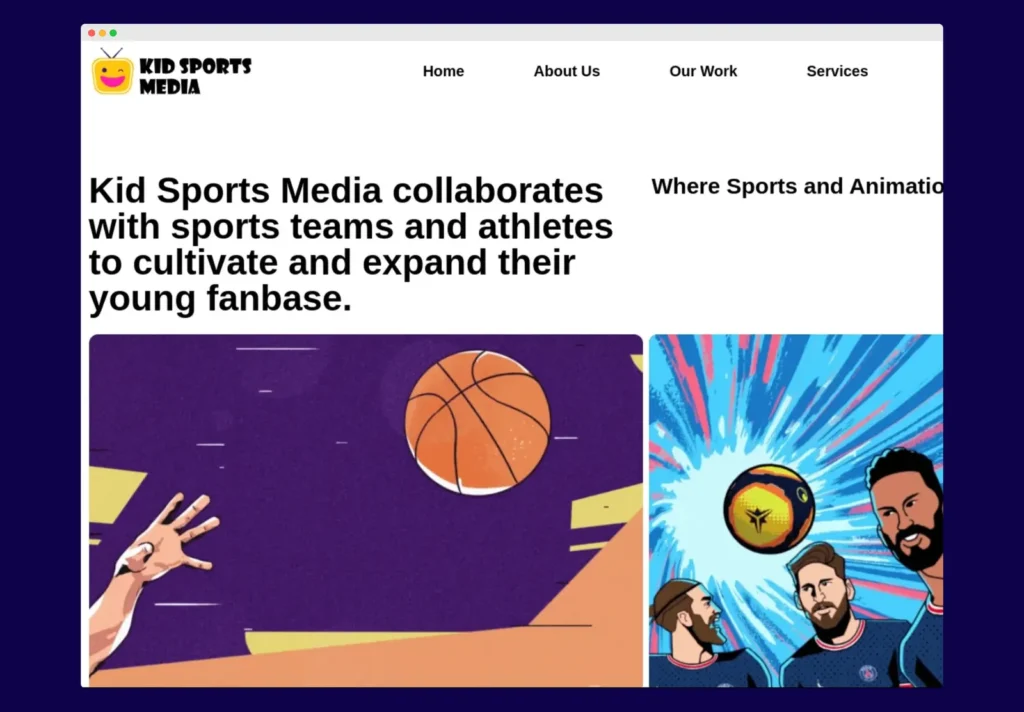
Kid Sports Media
Codefreex rebuilt the Kid Sports Media website as a headless platform: Strapi for content, statically generated pages for speed, and a global CDN for photos and…
View full case studyClient stories
Hear it from our clients
Real founders and teams on what it is like to build with Codefreex.


FAQ
Headless Commerce: FAQs
Straight answers to what buyers ask us most. Still unsure? Book a free 30-minute call.
What is headless commerce?
Headless commerce is an architecture where the storefront customers see is built separately from the commerce engine behind it. The backend, such as Shopify, manages products, inventory, carts and checkout, and exposes them through APIs. The front end, built with a framework like Hydrogen or Next.js, calls those APIs. This split gives you full control over design, speed and content.
Is headless commerce worth it for a Shopify store?
Headless is worth it for a Shopify store when your design, content or speed needs go beyond what a theme can deliver and you have the budget to maintain a custom front end. For many stores, an optimized Online Store 2.0 theme gives most of the benefit at a lower cost. Codefreex runs a fit assessment first and will recommend a theme build if that is the better option.
What is the difference between Shopify Hydrogen and Next.js?
Hydrogen is Shopify’s own React framework for headless storefronts, while Next.js is a general-purpose React framework that can connect to any commerce backend. Hydrogen includes ready-made Shopify components, and hosting on Shopify Oxygen is included with most paid plans. Next.js has a larger ecosystem and suits multi-backend or content-heavy builds. We choose based on your platform, team and roadmap.
How much does headless commerce development cost?
Headless commerce development costs more than a theme build because you are building and maintaining a custom application, not configuring a template. The main cost drivers are the number of page types, CMS setup, integrations and custom features like product configurators. Codefreex gives you a detailed quote after the fit assessment, including expected hosting and maintenance costs, so you see the full cost of ownership upfront.
Will going headless hurt my SEO?
Going headless should not hurt your SEO if the build uses server-side rendering, clean URLs, structured data and a complete redirect map. Problems usually come from client-side-only rendering or redirects missed at launch. Codefreex plans SEO into the architecture, tests crawlability before launch and monitors Search Console afterward, so your rankings stay protected through the switch.
How long does a headless commerce build take?
Headless storefronts typically take 6–8 weeks, depending on scope and integrations. Large catalogs, custom configurators or several connected systems can extend that. Codefreex confirms the timeline after the architecture phase and ships in sprints with preview links, so you review progress every week instead of waiting for one big reveal.
Can my marketing team still edit content without developers?
Yes. A well-built headless store gives marketers more editing freedom, not less. Codefreex sets up a headless CMS such as Sanity, Contentful, Strapi or Shopify metaobjects with reusable sections, live previews and scheduling, so your team can build landing pages, update banners and publish campaigns without opening a developer ticket.
Free estimate
Find out if headless fits your store
Share your store and goals. On a free 30-minute call, we will tell you whether headless or an optimized theme pays back better.
- A senior strategist reviews your request, not a sales bot
- Clear scope, timeline and estimate within one business day
- Free 30-minute discovery call, no obligation
- NDA available on request
- Emailhello@codefreex.com
- CallUSA +1 (209) 375-3475 · India +91 790 3375 530
- Prefer to talk?Book a 30-minute call
Keep exploring
Related services
Shopify Plus Development
We help high-volume brands get full value from Shopify Plus: checkout extensibility, Shopify Functions, B2B, multi-market selling and automation, built by a Shopify Partner with a Plus badge.
ExploreShopify Development
From custom themes and Shopify Plus builds to headless storefronts and private apps, Codefreex builds Shopify stores that load fast, match your brand and convert more browsers.
ExploreSpeed Optimization
We find what slows your WordPress, Shopify or custom site, fix LCP, INP and CLS at the source, and keep pages fast after every new app, plugin and campaign.
Explore