
Custom software development
Custom Software Built Around How Your Business Works
Internal tools, customer portals, dashboards and workflow apps designed for your exact processes, connected to the systems you already run, and built to grow with your team.
Quick answer
What do Codefreex’s custom software development services include?
Codefreex custom software development services cover internal tools, customer and vendor portals, dashboards, workflow apps, legacy system modernization and integrations with your existing platforms. We scope the workflow first, then design, build, test and deploy with React, Next.js, Node.js, Laravel or Python. You own the code, and ongoing support keeps the software current as your business changes.
540+
Projects delivered
9+
Years in business
23+
Certified experts




Trusted by 540+ growing businesses worldwide











Custom Software Development
Off-the-shelf software makes you work its way
Most growing businesses run on a patchwork of SaaS tools, spreadsheets and email threads. Each tool solves part of the problem, but nobody owns the gaps between them, so your team re-keys data, chases approvals and builds reports by hand. Per-seat pricing climbs every time you hire, and the one feature you need is always on next year’s roadmap.
Codefreex builds software that fits the way your business already works, then makes that way faster. We start with the workflow, not the tech stack: who does what, which data moves where and where errors creep in. Then we design and build a focused application, connect it to the tools you keep, and hand you full ownership of the code.
What you get
Custom software we design and build
Six kinds of software that remove manual work, replace fragile spreadsheets and give your team one reliable place to get things done.
Internal Tools and Admin Panels
Operations consoles, approval queues and back-office tools that replace spreadsheets and shared inboxes, with role-based permissions, audit trails and the exact fields your team actually needs.
Customer and Vendor Portals
Secure portals where clients track orders, download documents, submit requests and pay invoices, or where suppliers update stock and pricing, without emailing your team for every change.
Dashboards and Reporting
Live dashboards that pull from your CRM, ERP, accounting and ecommerce data, so leaders see revenue, margins and bottlenecks in one place instead of waiting for a monthly spreadsheet.
Workflow Automation Apps
Apps that route tasks, trigger approvals, generate documents and send notifications based on your business rules, cutting the handoffs and follow-ups that slow every process down.
Legacy System Modernization
We move aging desktop software, Microsoft Access databases and old PHP or on-premise systems to modern web applications in stages, keeping the business running while old modules are replaced.
Integrations and APIs
Your new software talks to the tools you keep, including Salesforce, HubSpot, QuickBooks, Shopify and Stripe, through documented APIs, webhooks and scheduled syncs with proper error handling.
Platforms and tools we work with
How we work
How we build your software
Clear phases, a named owner for every deliverable and weekly progress you can see.
Discovery and Scope
We map your workflows, users, data sources and integrations with the people who do the work, then agree on a written scope, priorities and a phased roadmap.
Design and Prototype
We design the key screens in Figma and build a clickable prototype, so your team can test the flow and request changes before development begins.
Build in Sprints
We develop in short sprints with a working build to review every week or two, plus automated tests, code reviews and a staging environment that mirrors production.
Launch and Support
We deploy with monitoring, backups and access controls, migrate your data, train your team, then keep improving the software through a support and maintenance plan.
Who it is for
Who we build custom software for
Operations-heavy businesses
Logistics, manufacturing and field service companies replacing spreadsheets and paper forms with scheduling, dispatch and job-tracking tools built around their process.
Professional services firms
Agencies, consultancies and legal or accounting practices that need client portals, document workflows and project dashboards their current tools cannot provide.
Distributors and B2B sellers
Wholesale businesses that need dealer portals, quote builders, pricing engines and order tracking connected to their ERP and inventory systems.
Companies outgrowing legacy systems
Teams running critical work on aging desktop software, Microsoft Access databases or old PHP apps that are hard to maintain and impossible to integrate.
Why teams switch to us
A software partner, not a code factory
Typical agency
- Quotes a fixed price after one call
- Builds features nobody tested with users
- Keeps the code on their own servers
- Moves on once the invoice is paid
 Codefreex
- Scopes the workflow before quoting the build
- Prototypes with your team before writing code
- You own the repository, cloud and data
- Supports, monitors and improves after launch
Buyer guide
Custom software development: a buyer’s guide
Custom software is a serious investment, so it pays to understand when building beats buying, what drives cost and timeline, and how to judge a development partner before you sign anything.
When custom software beats off-the-shelf tools
Buy before you build. If a mature SaaS product covers most of a workflow and the rest is a minor inconvenience, subscribe and move on. Custom software earns its cost when the workflow is how you compete, such as a pricing engine, a scheduling model or a client experience rivals cannot copy. It also makes sense when per-seat fees across several tools add up to more than owning one system, or when the data you need is spread across apps that refuse to talk to each other.
A middle path often works best. Keep commodity tools such as email, accounting and payroll, and build the layer that connects them around your process. Low-code platforms like Retool or Airtable can be a sensible first step for simple internal tools, but they hit limits on complex logic, performance, permissions and per-user pricing. We will tell you plainly when an existing product or a low-code tool is the better answer for your situation.
What a custom software project includes
A complete project covers far more than writing code. Discovery maps the workflow, users, data and integrations, and ends with a written scope. UX design turns that scope into wireframes and a clickable prototype in Figma, so your team can test the flow before development starts. Architecture decisions come next: the framework, database, hosting, authentication and how the system will connect to the tools you already use.
Development then runs in short sprints, with a working build you can review every week or two. Testing covers automated unit and integration tests, plus manual testing against real scenarios from your team. Deployment sets up hosting on Amazon Web Services or another cloud, CI/CD pipelines with GitHub Actions, backups, monitoring and access controls. Handover includes documentation, admin training and a support plan, so the software keeps working long after launch.
What drives the cost of custom software
Cost follows complexity, not screen count. The biggest factors are the number of user roles and permission levels, how many distinct workflows the software handles, how complex the business rules are, and how many third-party systems it must integrate with. An integration with a well-documented API such as Stripe is quick. Connecting to an older ERP with no API, inconsistent data and strict change windows takes far longer.
Data migration is the other big variable. Moving years of records from spreadsheets or a legacy database means cleaning duplicates, mapping fields and validating the result. Compliance needs such as audit logs, data residency or HIPAA safeguards add work too. Ongoing costs include hosting, monitoring and maintenance. The most reliable way to control budget is a tight first release: build the workflows that save the most time first, then expand from real usage.
How long custom software takes to build
Timelines depend on scope, but the shape of a project is predictable. Discovery and design usually take a few weeks. A focused first release, such as one internal tool or a single portal with a handful of workflows, often reaches production within a few months. Larger platforms with many roles, integrations and data migrations are delivered in phases over a longer period, with each phase going live on its own.
Phased delivery matters more than the total timeline. A project that ships nothing for most of a year carries far more risk than one that puts a working module in front of users early and improves it from real feedback. What slows projects down is rarely the coding. It is late decisions, unavailable stakeholders, unclear ownership of data and integration partners who take weeks to grant API access.
How to choose a custom software development company
Ask to see how a partner runs discovery before you see a quote. A team that prices a complex system after one call is guessing, and guesses turn into change requests later. Look for a written scope, clear assumptions and a plan for the riskiest parts, such as integrations or data migration. Ask who will actually write the code, how often you will see working software and how they handle shifting priorities.
Ownership terms matter just as much. You should own the source code, the cloud accounts and the domain from day one, with the repository in your own GitHub organization. Ask about testing, documentation and what happens after launch: who fixes bugs, how security updates are applied and how quickly support responds. Codefreex works this way by default, backed by 9+ years of experience and 540+ projects delivered for businesses worldwide.
Selected work
Proof from real projects
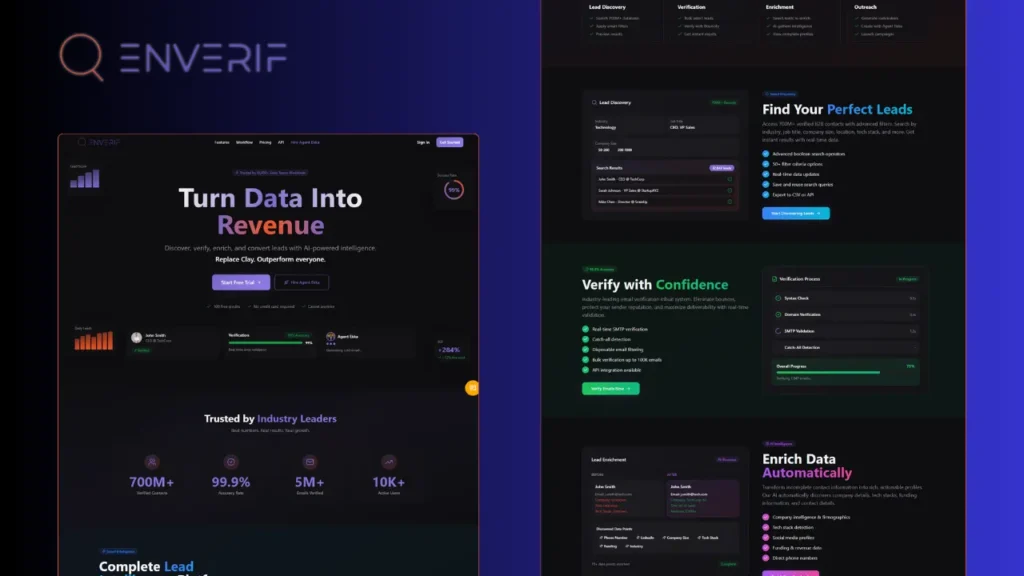 4.8x faster lead processing
Enverif – AI-Powered Lead Intelligence for Outperforming Sales Teams
Codefreex built Enverif, an AI-powered lead intelligence platform for B2B sales teams. It combines 700M+ verified contacts, real-time…

OnePloy – Building a Cloud Platform for Apps, Databases and AI
Codefreex built OnePloy, a cloud platform for deploying web apps, APIs, databases and AI services in one place.…
Client stories
Hear it from our clients
Real founders and teams on what it is like to build with Codefreex.


FAQ
Custom Software Development: FAQs
Straight answers to what buyers ask us most. Still unsure? Book a free 30-minute call.
How much does custom software development cost?
Custom software cost depends on the number of user roles, workflows, business rules and integrations, plus any data migration and compliance requirements. A single internal tool is a much smaller project than a multi-portal platform. Codefreex scopes every project after a free 30-minute discovery call and sends a written estimate with clear assumptions, so you know exactly what is included before any work starts.
How long does it take to build custom software?
A focused first release, such as one internal tool or portal, usually goes live within a few months, with discovery and design taking the first few weeks. Larger systems are delivered in phases, so each module reaches users as soon as it is ready. Integration access, data quality and decision speed affect the timeline more than the coding itself does.
Should we build custom software or buy an existing tool?
Buy when a mature product covers most of your workflow and the gaps are minor. Build when the workflow sets you apart, when several tools need stitching together, or when per-seat fees outgrow the cost of owning a system. Codefreex often recommends a mix: keep commodity tools for email and accounting, and build the layer that connects them around your process.
Will we own the source code?
Yes. You own the source code, the cloud accounts and the data from the start. We work in a repository under your GitHub or GitLab organization and deploy to hosting accounts in your name. If you later move development to your own engineers or another vendor, the documentation and access are already in place for a clean handover.
Can you modernize our legacy system without disrupting the business?
Yes. We modernize in stages instead of switching everything off over one weekend. New modules are built alongside the old system and take over one workflow at a time, with data kept in sync during the transition. Users move to each new module only after it has been tested, so daily operations keep running while the legacy system is retired piece by piece.
Which technologies do you use for custom software?
We choose the stack that suits your project and your future team. Common choices include React and Next.js for front ends, Node.js, Laravel or Python for back ends, PostgreSQL for data, and Docker on Amazon Web Services for hosting, where Codefreex is an AWS Partner. We avoid obscure frameworks, so any competent developer can maintain the code later.
Can the software integrate with our CRM, ERP and accounting tools?
Yes. Integrations are part of almost every project we build. We connect custom software to Salesforce, HubSpot, Zoho, Odoo, QuickBooks, Xero, Shopify, Stripe and most platforms that offer an API, using webhooks and scheduled syncs with logging and retries. Codefreex is a Salesforce Partner, Zoho Authorized Partner and Odoo Partner. Where no API exists, we look at database access or file-based imports.
Do you provide support after the software launches?
Yes. After launch we offer support and maintenance plans that cover bug fixes, security updates, dependency upgrades, monitoring and small improvements. Most custom software keeps evolving as your processes change, so plans can also include a monthly block of development time for new features. You get a named point of contact and response times agreed in writing.
Free estimate
Tell us which process slows you down
Book a free 30-minute call. We’ll map the workflow and outline what a first release could include.
- A senior strategist reviews your request, not a sales bot
- Clear scope, timeline and estimate within one business day
- Free 30-minute discovery call, no obligation
- NDA available on request
- Emailhello@codefreex.com
- CallUSA +1 (209) 375-3475 · India +91 790 3375 530
- Prefer to talk?Book a 30-minute call
Keep exploring
Related services
API Development & Integration
We design, build and document REST and GraphQL APIs, connect your platforms to Stripe, HubSpot, Shopify, Salesforce and your ERP, and keep every integration secure and monitored.
ExploreSaaS Development
We build multi-tenant SaaS products with billing, auth and AI features, using the same playbook behind Codefreex’s own products: Nimora, PageForge, Aeoora, Prosyo and OnePloy.
ExploreDevOps Services
Codefreex builds CI/CD pipelines, infrastructure as code, monitoring and incident runbooks, so your team ships more often, with fewer failed releases, faster recovery and cloud costs you can explain.
Explore