
ITSM implementation
ITSM Implementation That Gets IT Out of the Inbox
We set up ITIL 4 aligned service desks on Jira Service Management, ServiceNow, Freshservice, Zendesk or HaloITSM, with portals, SLAs, automation and asset tracking your IT team will use.
Quick answer
What do Codefreex’s ITSM implementation services include?
Codefreex ITSM implementation services set up IT service management aligned with ITIL 4: service desk and portal, incident, problem, change and request management, service catalog, SLAs, knowledge base, asset management and CMDB, automation and AI triage, and reporting. Codefreex works on Jira Service Management, ServiceNow, Freshservice, Zendesk and HaloITSM, and migrates data between tools.
540+
Projects delivered
9+
Years in business
23+
Certified experts




Trusted by 540+ growing businesses worldwide











ITSM Implementation
IT support should not run on email threads
- 540+projects delivered
- 9+years in business
- 23+certified experts
A senior strategist replies within one business day.
When IT requests arrive by email, chat and hallway conversations, nothing gets measured and everything feels urgent. Password resets sit next to outages in the same inbox, nobody knows who owns what, changes go live without review, and the same incident comes back every month because no one investigates the cause. Leadership asks how IT is performing, and the honest answer is a guess.
Codefreex implements ITSM platforms that bring structure without bureaucracy. We design request types and a service catalog people can find, set up incident, problem and change workflows aligned with ITIL 4, define SLAs that match real business priorities, and connect your asset data and identity tools. Then we add automation and AI triage for repetitive work, build reports leadership can trust, and train agents and end users.
What you get
ITSM capabilities we implement
Core ITIL 4 practices configured on the platform you choose, sized for your team rather than copied from a large enterprise template.
Service Desk and Portal
A single front door for IT: a branded self-service portal, email and chat channels, request forms with the right fields, and queues that route each ticket to the right group.
Incident and Problem Management
Priority matrices based on impact and urgency, major incident procedures, escalation rules and problem records that link recurring incidents to root causes and known errors.
Change Enablement
Standard, normal and emergency change types, risk assessment, approval workflows, change calendars and post-implementation reviews, so changes move quickly without surprising the business.
Service Catalog and Requests
Catalog items for access, hardware, software and onboarding, with approvals, fulfillment tasks and automation, so routine requests are handled consistently without back-and-forth emails.
Asset Management and CMDB
Hardware and software assets, licenses and configuration items with their relationships, populated from discovery tools, MDM and identity systems instead of spreadsheets nobody updates.
Automation and AI Triage
Auto-categorization, priority suggestions, routing, suggested knowledge articles and virtual agents for common requests, using the AI features built into your platform, with human review where it matters.
Platforms and tools we work with
How we work
How we implement your ITSM platform
Clear phases, a named owner for every deliverable and weekly progress you can see.
Assess and design
We review your current support channels, ticket data, tools and pain points, then design request types, priorities, workflows, SLAs and the first-phase scope.
Configure and integrate
We configure the platform, portal, catalog, automations and SLAs, and connect identity, chat, email, asset and monitoring tools in a test environment.
Migrate and test
We migrate tickets, knowledge articles and assets, run real scenarios with your agents, and fix gaps before the new service desk goes live.
Launch, train and improve
We launch with agent and end-user training, watch queues and SLAs closely, then add problem, change or CMDB phases once the foundation settles.
Who it is for
Who we implement ITSM for
Companies replacing email support
IT teams moving from shared inboxes and spreadsheets to a real service desk with a portal, SLAs and measurable performance.
Teams already on Atlassian
Organizations on Jira and Confluence adding Jira Service Management, with Assets, knowledge articles and links to engineering work in one place.
Managed service providers
MSPs that need separate queues, SLAs and reporting for each client, with branded portals and clean ticket data for billing.
Teams switching platforms
IT teams outgrowing their current tool, migrating tickets, knowledge and assets between ServiceNow, Freshservice, Zendesk, HaloITSM and Jira Service Management.
Why teams switch to us
ITSM implementation sized for your team
Typical agency
- Copies enterprise ITIL templates wholesale
- Dozens of categories nobody uses consistently
- SLAs set without looking at real data
- No reporting until leadership asks for it
 Codefreex
- ITIL 4 practices sized to your team
- Short, clear request types users understand
- SLAs based on your actual ticket history
- MTTR, SLA and backlog dashboards from launch
Buyer guide
ITSM implementation: a buyer’s guide
A service management platform is only as good as the processes behind it. This guide covers what ITSM implementation includes, how to apply ITIL 4 sensibly, how the main platforms compare, and what drives cost.
What ITSM implementation includes
IT service management is how your IT team receives, prioritizes, fulfills and improves the services it provides. An ITSM implementation turns that into a working system: a service desk with a self-service portal and clear channels, workflows for incidents, problems, changes and service requests, a service catalog, SLAs, a knowledge base, asset and configuration data, automation and reporting. The platform matters, but most failed implementations fail on design, not software. Request types nobody understands, priorities that make everything urgent and approval chains that stall simple requests will hurt adoption on any tool.
A good implementation starts small and grows. Most teams begin with the service desk, incident management, request fulfillment and a basic knowledge base, because those produce visible improvements for end users soon after launch. Change enablement, problem management, asset management and the CMDB follow once the foundation is stable. Codefreex configures the platform, designs the workflows, migrates your existing tickets and knowledge articles, integrates identity, chat and monitoring tools, and trains agents and users, so the new service desk replaces old habits rather than adding another inbox.
Applying ITIL 4 without the bureaucracy
ITIL 4 is the most widely used framework for IT service management, and it describes practices rather than rigid processes. The practices that matter most in an implementation are incident management for restoring service quickly, problem management for removing root causes, change enablement for making changes safely, service request management for routine requests, service level management for SLAs, knowledge management, and IT asset and service configuration management for assets and the CMDB. Each one maps to concrete platform features: request types, workflows, approval rules, SLA goals and linked records.
The mistake is copying ITIL into a tool word for word. A small IT team does not need a weekly change advisory board or a dozen incident categories. Start with what solves real problems: a priority matrix built on impact and urgency, a few change types with risk-based approvals, pre-approved standard changes, and SLAs that reflect business hours and what users actually care about. ITIL 4 itself encourages you to start where you are and improve iteratively. We design for your size today, with room to add rigor as the team and the risk grow.
Jira Service Management vs ServiceNow vs Freshservice
Jira Service Management suits teams already on Jira and Confluence. It links service requests to engineering work, includes Assets for the CMDB, and handles request types, queues, SLAs and automation well, with pricing that scales from small teams upward. ServiceNow is the enterprise standard, with deep ITSM, CMDB, discovery, workflow and integration capabilities, but it needs dedicated administrators and a larger budget to run well. Freshservice is quick to deploy, with a clean agent interface, built-in asset discovery, workflow automation and Freddy AI, which makes it popular with mid-size IT teams that want results without heavy configuration.
HaloITSM is an ITIL-aligned platform with strong out-of-the-box processes and flexible configuration, a good fit for mid-size and larger teams that want depth with less administrative overhead. Zendesk is primarily a customer service platform, but it works for internal IT help desks, especially when IT and customer support share one tool and processes are simple. The right choice depends on your existing stack, team size, process maturity, integration needs and budget. We are platform-agnostic, so we compare options against your requirements rather than steering you toward one vendor.
Migrating between ITSM tools
Moving from one service desk to another, whether from email and spreadsheets, Zendesk, Freshservice, an older on-premise tool or ServiceNow, is a data project and a process project at the same time. Tickets, comments, attachments, requesters, agents and groups need mapping. Knowledge articles need reformatting and usually a cleanup. Assets and configuration items carry relationships that must survive the move. SLAs, automations and approval rules cannot be copied directly, because every platform models them differently, so they get redesigned for the new tool. It is also the best moment to retire categories, request types and rules nobody uses.
We migrate in a planned sequence. First, we decide how much ticket history is worth moving, since many teams only need open tickets plus a defined period of closed history, with the rest archived and searchable. Then we run a test migration, validate record counts and spot-check tickets with your agents. Integrations with identity, chat, email and monitoring tools are rebuilt and tested. On cut-over, email channels and portal links switch to the new platform, and the old system goes read-only for reference until it is safe to retire.
What drives ITSM implementation cost and timeline
ITSM implementation cost depends on the platform, how many practices you launch in the first phase, the number of request types and catalog items, how complex your approval and SLA rules are, the volume and quality of data being migrated, integrations with identity, MDM, monitoring and chat tools, and how many agents and end users need training. CMDB work is often the largest variable, because accurate configuration items and relationships take discovery and cleanup. Platform licenses are billed by the vendor, separately from implementation work. We scope everything into a phased written estimate.
Timelines follow the same factors. A focused service desk launch with incidents, requests and a portal typically takes a few weeks on Freshservice or Jira Service Management, while enterprise ServiceNow programs or full CMDB builds take longer. The common mistakes are predictable: too many categories, SLAs nobody can meet, a portal that mirrors IT’s org chart instead of what users need, automation built before the process is stable, and no reporting plan. We set up reports from day one on mean time to resolve, SLA compliance, backlog age, first contact resolution, change success rate and user satisfaction.
Selected work
Proof from real projects
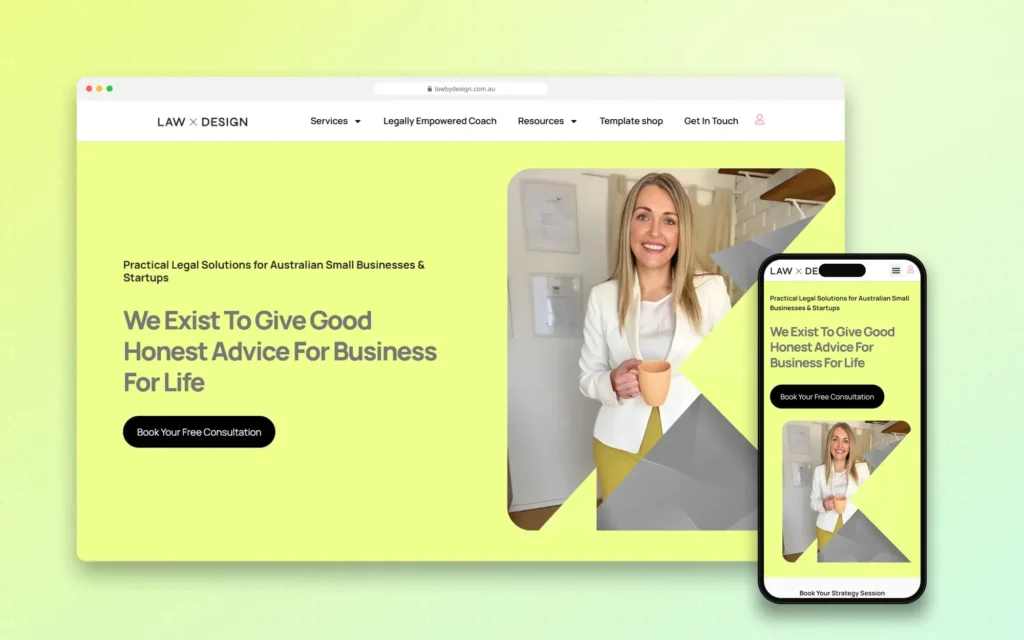 +34.2% Google organic sessions, June 2026 vs May
Law by Design – Web Design, Social Media and SEO
Codefreex handles web design, social media and SEO for Law by Design. The team designed and built the…
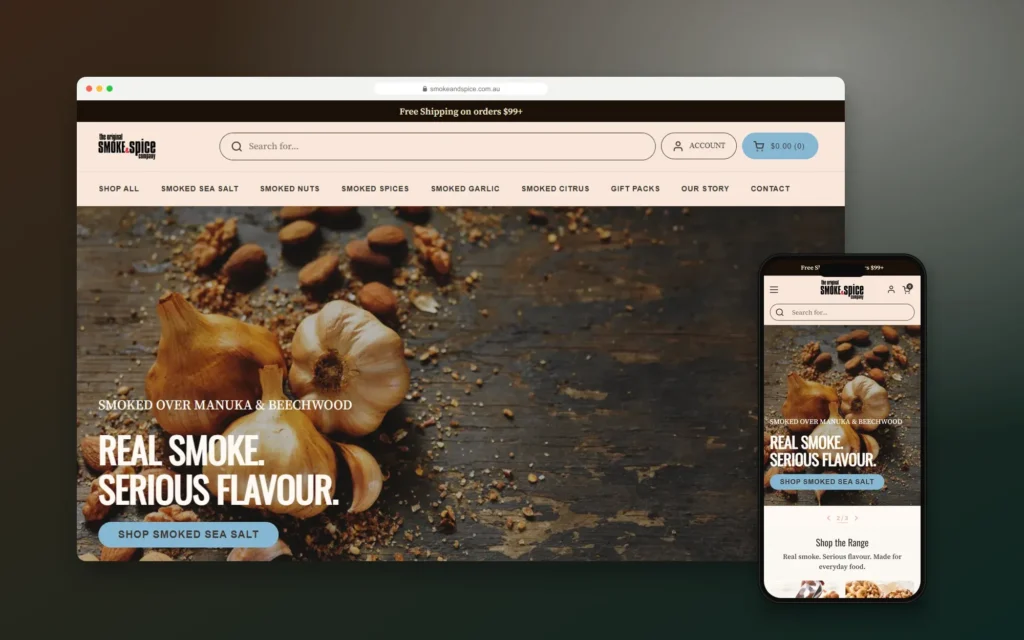
Smoke & Spice – Mobile-First Shopify Store for a Sydney Smoked Foods Brand
Codefreex designed and built a mobile-first Shopify store for The Original Smoke & Spice Company, a family business…

Elevate by She Is Elevated – Luxury Wellness Event Website for Women Leaders
Codefreex designed and built the website for Elevate by She Is Elevated, a one-day luxury reset for executives,…
Client stories
Hear it from our clients
Real founders and teams on what it is like to build with Codefreex.


FAQ
ITSM Implementation: FAQs
Straight answers to what buyers ask us most. Still unsure? Book a free 30-minute call.
How much does ITSM implementation cost?
ITSM implementation cost depends on the platform, how many ITIL practices you launch in the first phase, the number of request types and workflows, data migration volume, integrations, CMDB scope and training needs. Platform licenses are billed separately by the vendor. Codefreex scopes the work after a free 30-minute discovery call and provides a phased written estimate before anything starts.
How long does an ITSM implementation take?
A focused launch covering the service desk, incidents, requests and a self-service portal typically takes a few weeks on Freshservice or Jira Service Management. Larger programs with change enablement, a CMDB, complex integrations or ServiceNow take longer. Data quality and approval speed affect timelines most. We phase the rollout so users see a working service desk early while advanced practices follow.
Which ITSM tool is best for our team?
It depends on your stack, size and process maturity. Jira Service Management suits teams on Atlassian tools. ServiceNow suits large enterprises with dedicated administrators. Freshservice suits mid-size teams that want fast deployment. HaloITSM offers deep ITIL alignment with flexible configuration, and Zendesk works when IT and customer support share one platform. We compare options against your requirements before you buy.
Do we need to follow ITIL 4 to implement ITSM?
No, but ITIL 4 is a practical guide to what good looks like. We use its practices, such as incident, problem, change and request management, as a reference and apply only what your team needs. A small IT team gets simple priorities and pre-approved standard changes, while larger teams add formal change review, problem management and a CMDB as risk grows.
Can you migrate our tickets from one ITSM platform to another?
Yes. We migrate tickets, comments, attachments, requesters, knowledge articles, assets and configuration items between platforms such as Zendesk, Freshservice, ServiceNow, Jira Service Management and HaloITSM. We decide with you how much history to move, run a test migration, validate counts and sample tickets, then rebuild SLAs, automations and integrations natively on the new platform.
How does AI help in IT service management?
AI can categorize and prioritize incoming tickets, route them to the right group, suggest knowledge articles before users submit a request, draft replies for agents and summarize long ticket threads. Most ITSM platforms now include these features, such as Freddy AI in Freshservice and Now Assist in ServiceNow. We configure them with clear rules and human review, and measure accuracy before expanding automation.
Can you set up asset management and a CMDB?
Yes. We set up hardware, software and license tracking and a CMDB with configuration items and relationships, populated from discovery tools, MDM platforms such as Microsoft Intune, and identity systems like Microsoft Entra ID or Okta. We start with the assets and services that matter most for incident and change decisions, because a smaller accurate CMDB beats a large one nobody trusts.
Do you support the service desk after launch?
Yes. After go-live, we monitor queues, SLAs and automations, adjust workflows based on real ticket data, add new catalog items and train new agents. We also deliver later phases, such as problem management, change enablement or CMDB expansion. Codefreex offers ongoing support so your platform keeps improving as the business and the IT team grow.
Free estimate
Give your IT team a real service desk
Tell us how IT support works today. We’ll recommend the platform and first-phase scope that fits your team.
- A senior strategist reviews your request, not a sales bot
- Clear scope, timeline and estimate within one business day
- Free 30-minute discovery call, no obligation
- NDA available on request
- Emailhello@codefreex.com
- CallUSA +1 (209) 375-3475 · India +91 790 3375 530
- Prefer to talk?Book a 30-minute call
Keep exploring
Related services
monday.com Implementation
We design workspaces, boards, automations and integrations across monday work management, monday CRM, monday dev and monday service, so work stops living in inboxes and spreadsheets.
ExploreAI Workflow Automation
We combine n8n, Make and Zapier with AI steps that read documents, sort email, enrich leads and write reports, with human approval where it matters and monitoring that catches failures early.
ExploreDevOps Services
Codefreex builds CI/CD pipelines, infrastructure as code, monitoring and incident runbooks, so your team ships more often, with fewer failed releases, faster recovery and cloud costs you can explain.
Explore